
Years ago, Disney ended the licensing of its video game rights to third parties in order to focus on making its own games in-house. While it was the decision that gave life to Disney Infinity and Marvel: Contest of Champions, it was also the move that prematurely ended the Marvel vs. Capcom 3 series. Once the game disappeared from store shelves and digital distribution channels, it seemed like the series was never coming back.
But like the Phoenix (who isn’t in the game yet), Marvel vs. Capcom: Infinite rises from the ashes to bring tag-based fighting action to the masses. Curiously missing a #4 in its name, it’s omission is clear once you see some of the dramatic changes that make it stray from the 3v3 format of yesteryear. Is this game still worthy of the Mahvel name?
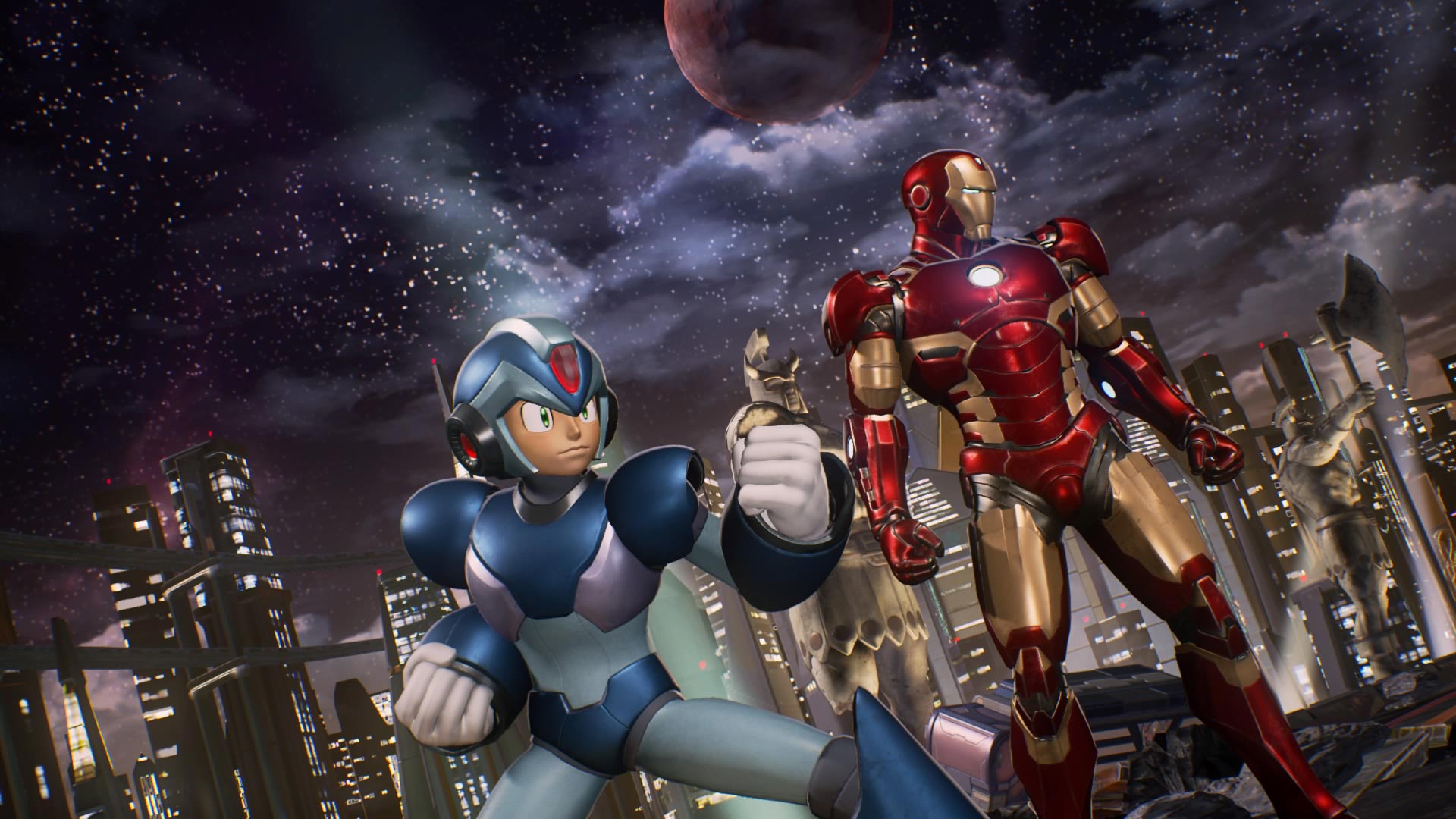
This time around, these two worlds collide due to an insidious plot by Ultron and Sigma to eradicate all human life. Of course, this doesn’t sit well with the heroes of their respective universes, so they band together to put an end to the madness. Unlike previous Capcom fighting games, the lore actually matters thanks to the inclusion of a proper Story mode. Similar to a campaign you’d find in a modern Mortal Kombat or Injustice game, players will take control of preset teams in between extended cutscenes.
On one hand, there are a number of cute moments and one-liners that the cast shares with one-another. However, it’s also equal parts cheesy and the overall story is pretty bad. It also doesn’t help that most of the fights are against mindless robots, zombies, or soldiers under Ultron Sigma’s control. If it’s any consolation, it does have an Arcade mode if you need more single player action that you play repeatedly.
Another factor that affects the story and everything else is the distinct lack of X-Men characters. Due to Marvel’s ongoing squabbles with Fox over movie rights, the characters that built the foundation for this franchise are sorely absent. As someone who only played as X-Men characters in the previous game, it’s soul-crushing. What remains is a pedestrian cast that is largely comprised of carryovers from the last game. Capcom appears to have a more aggressive character DLC plan in place, but what you get at the start is going to be a tough sell.

Even without my terrific trio of Wolverine/Storm/Sentinel, does the gameplay still hold up? Unlike the 3v3 format that became the standard with Marvel vs. Capcom 2, we get 2v2 with the choice of one of six infinity stones. Lowering the player count doesn’t lower the zaniness though, as Capcom has made intelligent tweaks to the system to compensate.
For one, at its core, the root of the combo system is still the same. There’s an openness to it that gives players a lot of creativity to fight how they want. While you no longer have the luxury of assists, what you get in return is just as crazy, if not crazier. The new Active Tag system allows players to switch freely between one another, allowing players to string together new kinds of massive combos and tricky mix-ups that weren’t possible before.
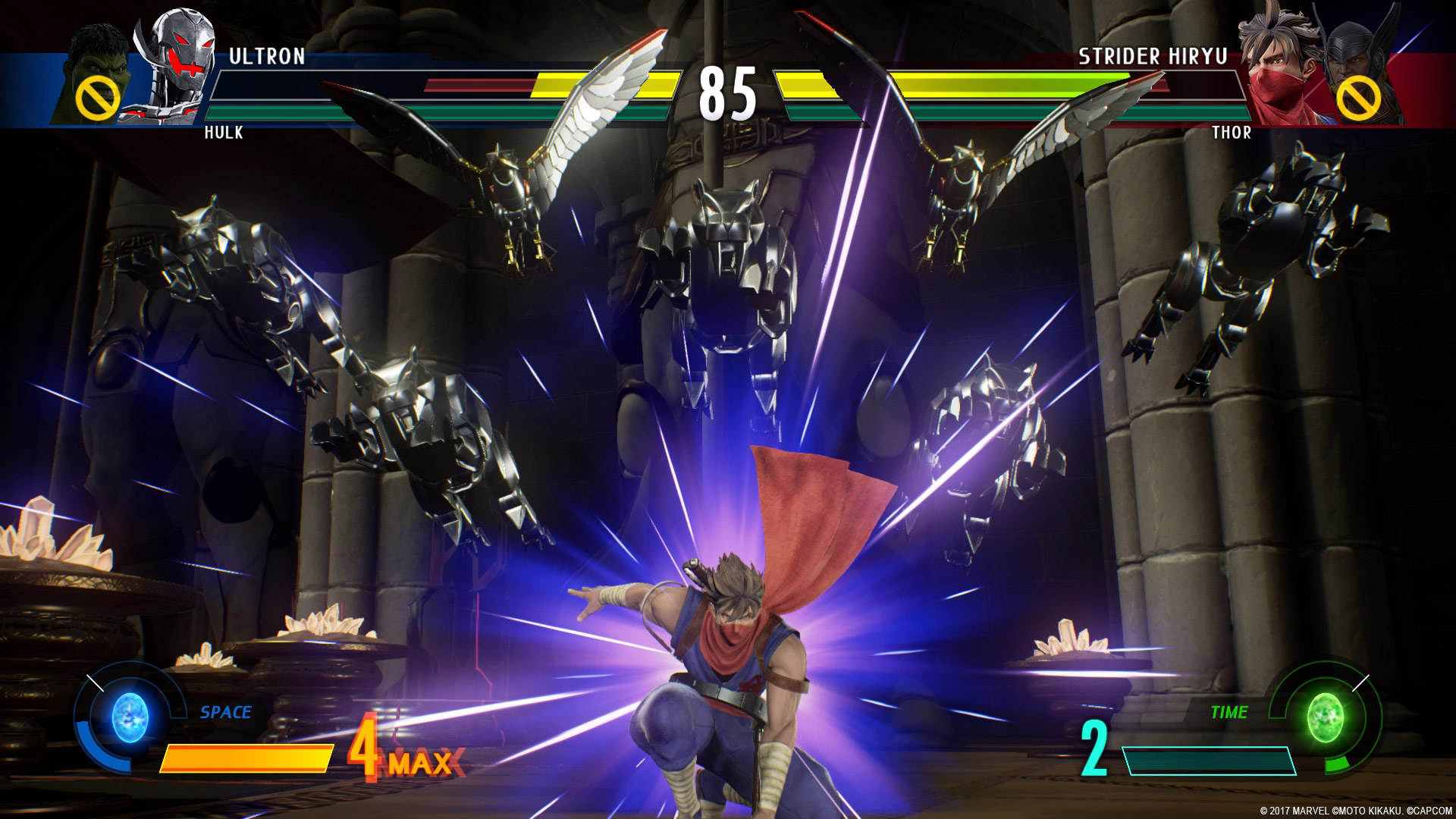
Instead of a third member of the team, you get to choose from one of six Infinity stones. Each one gives your team a unique attribute, from an extra wall bounce, to an extra air dash, to the ability to absorb health from your opponents among others. When fully charged up, you can activate an Infinity Storm to unleash their true abilities. These can really turn up the action. One of my favourites is the Space stone, which locks your opponent in a small box, limiting their movement greatly. Depending on the stone you choose, you can dramatically change how your team works.
When it all comes together, it’s an experience that isn’t exactly like the last few Marvel vs. Capcom games, but it’s a fighting engine certainly worthy of the name. Once you’re able to control some of what’s possible, it’s a very fluid and liberating combat system that encourages creativity.

Getting to that point is still going to a challenge. Some aspects of the game have been simplified, but it’s still one of the most dense and intimidating fighters to comprehend. There is a simple combo mode that allows players to mash light punch to complete a basic sequence of attacks, but I don’t think it does much to even satisfy the button-mashing crowd. Where the game really falls flat is in its teaching tools. A rudimentary Tutorial mode is in place to teach you the game mechanics, but the Trial mode ramps up way to quickly to be useful for most players.
When you’re ready to test your mettle, there’s a fairly standard suite of online options at your disposal. You have your standard Ranked and Casual modes, as well as a Beginner League for newcomers to sharpen their skills before venturing off into the wilderness. For players concerned about smurfing, it doesn’t take long for players graduate, so there isn’t much incentive to hang around the bottom.

As for the netcode itself, it’s fairly solid. Unlike its predecessor, which faltered under anything less than optimal conditions, this game uses rollback netcode to keep things together. Based on my experience thus far, it holds up better than Street Fighter V does. The percentage of matches that go sideways is certainly smaller than with Capcom’s other key fighter. Players who love to play online will greatly enjoy this.
While I’m glad to see the Marvel vs. Capcom series return in fairly good shape, there are some glaring holes in the package that will be deal-breakers for a notable portion of the audience. The drab roster, sub-par teaching tools, and graphics that are a bit underwhelming undermine the game’s stellar combat engine. If you’re able to prioritize gameplay above all, this is a gem in the rough.
 Buy Marvel vs. Capcom Infinite Now From Amazon.com

 In Third Person