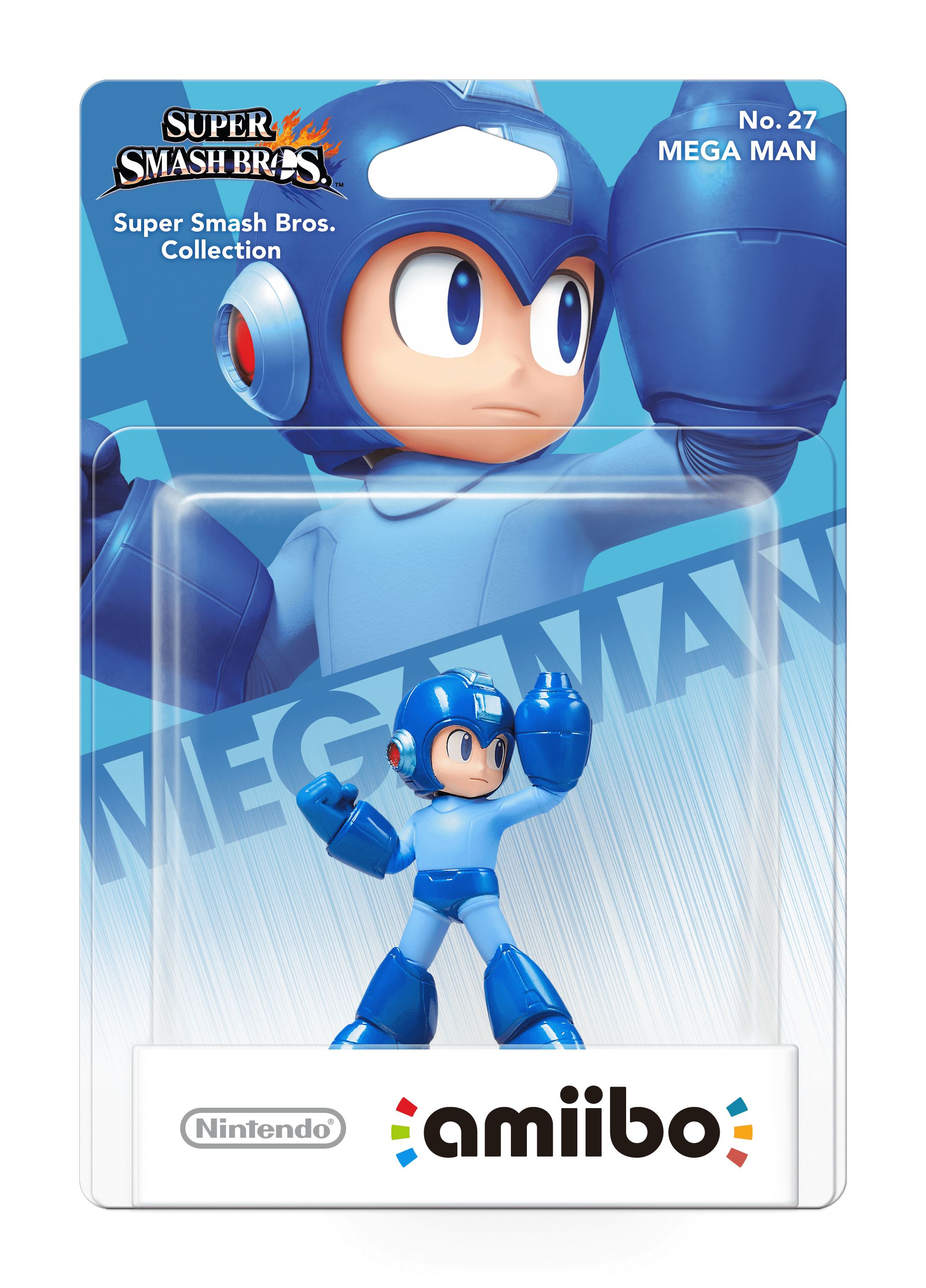
Amiibo Story: Pit

Some of my earliest memories of gaming involve Kid Icarus. Not so much the actual playing of the game, but the hype surrounding it. In talks with other kids who were into Nintendo, Kid Icarus was thrown out there as being one of those marquee titles along with the likes of Mario and The Legend of Zelda. Heck, even Pit was a key sidekick in Captain N: The Game Master.

However, at the time, I didn’t understand the hype. I didn’t like that game as a kid and I still don’t like it now. Years later though, Pit would win me over with one of my all-time favourite Nintendo 3DS games.

Continue reading

An Amiibo Story: Princess Zelda

Skylanders and Disney Infinity toys are alright, but they certainly don’t pull at my heart strings quite like Nintendo’s Amiibo line of figurines. Based on their legendary roster of characters – and a few friends from outside of the family – these figurines are symbolic of my love of not only Nintendo, but video games as a whole. Most of these characters ushered me into the medium as a young child and have continued to provide me with joy ever since.

Having just bought my first Amiibo, I thought it’d be cool to write about the process of collecting these figures and what each one means to me. Let’s start this off with the first Amiibo in my collection, who just so happens to be the first lady of Hyrule.

Continue reading

Next Gen Busts

Last summer, my excitement for the start of next gen with the PlayStation 4 and Xbox One was at a fever pitch. It had been a long time since we’d made a technological leap and was anxiously looking forward to what the future would hold for gaming with these new machines. A year later, and both of them are basically just collecting dust on my shelf.

Continue reading

So I Backed My First Kickstarter

Off the strength of a countless number of success stories, the crowdfunding process have become a staple of the modern entreprenurialship. Thanks to services like Kickstarter and Indiegogo, entrepreneurs have an easier way of raising money for their projects while backers can receive exclusive stuff for their support. Crowdfunding successes can be found in virtually every field, from video games, movies, books, and even potato salad.

While I’m all for the crowdfunding model, and I’ve certainly purchased Kickstarter products after the fact, I’ve been reluctant to back a project. Understanding the fact that Kickstarter is not a store and that the completion of any given project isn’t guaranteed, I haven’t been comfortable with the thought of giving my money to a scam or a project that won’t make it through. However, with the release of one particularly appealing project and weeks of internal debate, I decided to put my money behind one. Continue reading

Ultra Street Fighter IV and the Thirst For Points

In the online world of Street Fighter IV, there are two primary metrics that define your skill level: Player Points and Battle Points. Player Points (also known as PP) is a numerical score that indicates your overall skill as a player, regardless of which character you choose. Battle Points (or BP for short) is a character-specific score that rates your ability with that character. At the end of each match, players earn or lose a varying amount of PP and BP based on whether they won or lost, as well as the point differential between opponents. For instance, if a player with a low PP beats a player with a high PP, then the winner in this case would get a lot of points. However, if the tables were turned and the player with a lot of PP beat a player with a low score, then their payout would be far less fruitful. From there, everyone’s PP and BP scores are compiled into regional and global leaderboards.

As if the combat in Street Fighter IV wasn’t addictive enough, this meta element of the experience has only made the game that much harder to shake. Within days of Ultra Street Fighter IV‘s release and the resetting of scores, I found myself hunkered down in front of the television in hopes of earning more points.

Continue reading

The Greatest Bits Returns With A New Street Fighter II Tribute Album

After a long hiatus, friend of the site The Greatest Bits returns with a Street Fighter II tribute album.

Capcom’s legendary fighter also contains some of the most iconic video game music of all-time. Each stage theme perfectly captures the personalities of each character and the on-screen action. The Greatest Bits sent me a copy of this album to listen to and I think this features some his best work yet.

If you like what you’re hearing from the track above, grab a song or the album on iTunes.

Have I finally burned out on video games?

Over the course of my lifetime, I’ve fallen very far down the video game rabbit hole. I’ve spent countless hours of my life playing them. Countless hours reading about them in magazines and the internet. Countless hours writing and talking about them through this blog. Probably have spent well over $10,000 on consoles, games and other gaming paraphernalia. To say that video games are just a pastime would be a gross understatement.

But how far can one man go before they’re just tired of it all? My parents thought I’d grow out of it, though I’ve proven them wrong by gaming well into adulthood. I thought that my fervour for the medium would never end, though my interest in video games of late has hit an all-time low.

Continue reading

Quarter Up: The Evolution of the Video Game Business Model

I hate the concept of free-to-play games. As someone who has grown up mostly buying boxed copies of video games at the store, I greatly dislike the idea of being given a game for free and then constantly harassed to pay later in exchange for cosmetic items or other things that directly impact my enjoyment of the experience. The fact that these games are wholly designed to maximize profits rather than to fully-realize a great gameplay experience is something I find rather gross.

Having said that, it’s easy to lose sight of the big picture. Video games have always been influenced by the business model behind them. Even if you go back to the arcade days where the monetization of the medium began, there was a business model driving that experience, too.

Continue reading

Using Console Sales to Define Success

Wii Won“I’m holdin’ all the cards and ****** wanna play chess now” – Drake, Pound Cake

In the annals of history, we as gamers have used console sales as a measure of success. Oftentimes, we use that as the primary factor in terms of who “won”. These home console winners include the Atari 2600, the Nintendo Entertainment System, the Super Nintendo, the PlayStation, the PlayStation 2 and the Nintendo Wii. Gamers always use sales as the primary measuring stick for why the NES or the PlayStation 2 won their respective generations.

Yet when gamers talk about the Wii/Xbox 360/PlayStation 3 era, the fact that the Wii outsold its competitors by a wide margin no longer matters. All you have to do is scour through one of many online threads about the matter to find all sorts of creative ways that people will spin the situation in Sony and Microsoft’s favour. The ways in which people always move the goal posts in this argument sickens me.

Continue reading

The Opportunity Budget

As an advertising industry professional by day, I hear my clients sometimes refer to something they call the opportunity budget. This bucket of money is meant to fund other marketing communications initiatives that are outside of the core plan. For instance, this could be used to promote a product that wasn’t originally going to get any marketing support. Or, this could be used to provide additional support to an existing plan.

As a gaming enthusiast, this concept is one that I apply to my spending habits. There are games that I know I’ll be buying within a given year that I can plan to purchase when the time comes. Then there are the games that I buy that deviate from that plan. In particular, these opportunity cost games are titles that I pick up as a means of expanding my horizons.
Continue reading