Brush up on your Ragna skills before BlazBlue Cross Tag Battle hits stores in June! I cover a few key tactics to add to your arsenal, from air-based mix-ups, to techniques you can use to extend your combos. Check it out!
Blazblue
BlazBlue Cross Tag Battle Beta Impressions for PlayStation 4 and Nintendo Switch
Up until the release of Dragon Ball FighterZ, Arc System Works was the fighting game developer I wanted to love more than I actually did. Experts at making visually-luscious and mechanically-complex fighters, the former has gotten me to buy a number of their games, while the latter has caused me to push them away in short order. Don’t get me wrong, there’s a place in this world for fighters with their level of depth, but it’s a bridge too far for me.
Maybe it was just the developer trying to cater to the Dragon Ball audience, but Dragon Ball FighterZ shows what Arc System Works can do when they attempt to tone down their core formula for something more accessible. While I think it went a smidgen too far with accessibility to the point where the game feels a bit too limiting in ways, it was the first of their games that I could really sink my teeth into and love on a deeper level.
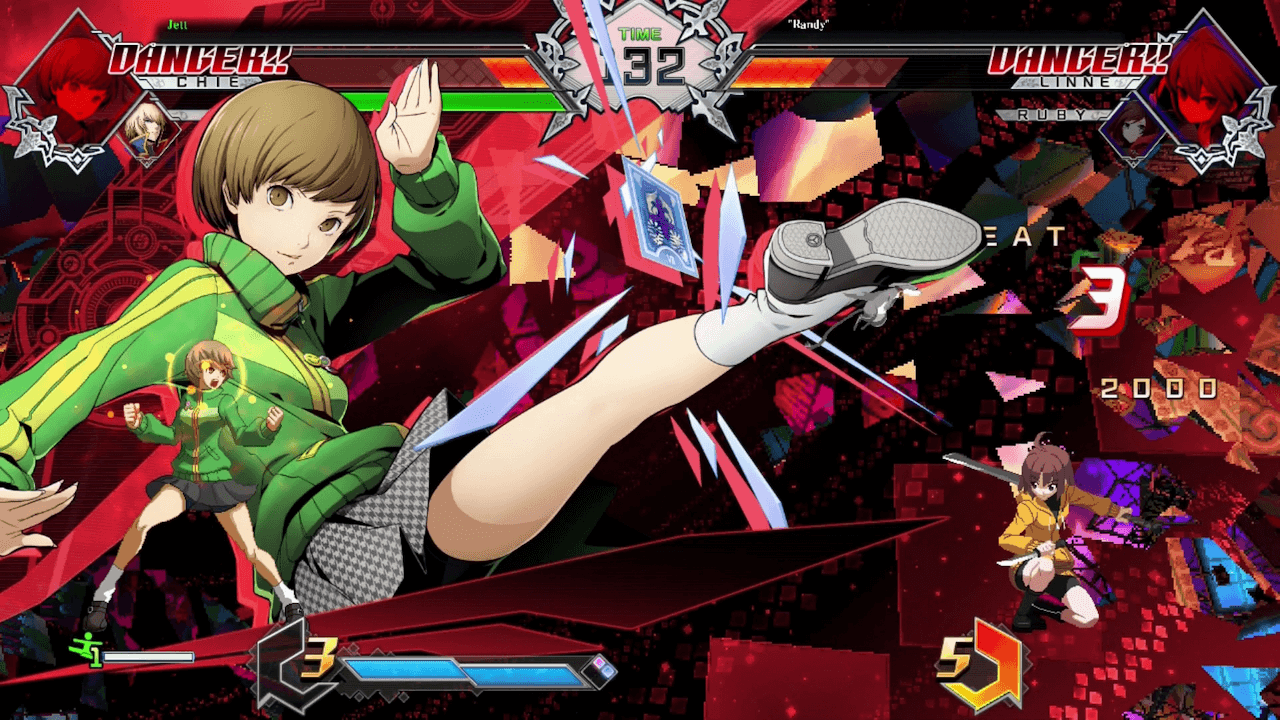
It may be too much to assume that the impact of FighterZ influenced the development of BlazBlue Cross Tag Battle, but based on my time with the beta on PlayStation 4 and Nintendo Switch, accessibility continues to be a focal point for the developer. At this pre-release juncture, I’m greatly enjoying what I’m seeing.
BlazBlue Cross Tag Battle Beta on PlayStation 4 and Nintendo Switch
I got in some quality time with the PlayStation 4 and Switch versions of BlazBlue Cross Tag Battle! I will say, coming into this with no expectations, I was wowed by how Arc System Works got the balance between accessibility and depth in a pretty good spot. Will be picking this one up on launch! Which version though? I don’t know the answer just yet.
Universal Fighting Game Guide: Gimmicky vs. Intelligent Tactics

Gimmicky fighting game techniques are about as old as fighting games themselves. When I first stepped up to a Street Fighter II machine back in 1991, the first character I ever chose was Blanka, as I thought I could cheat the system by simply mashing the punch buttons to trigger Blanka’s electricity move. At the time, I thought it was a fool-proof tactic…for about 5 seconds. Instead, the computer systematically picked me apart as I wailed on those punch buttons, thinking the electricity move was bound to save me eventually.
While gimmicks may have their place in extremely specific situations, they’re not a substitute for solid and intelligent play. In this month’s Universal Fighting Game Guide post, we’ll talk about the difference between gimmicky and intelligent tactics.
Universal Fighting Game Guide: Meter Management

Back in the old days of fighting games, you only had to worry about one meter: the life meter. As long as that meter didn’t run out, you were golden. However, as the genre progressed, so to did the number of meters you were required to manage. Today, almost every fighting game has some sort of super/EX/resource meter that grants you additional moves at the cost of the resources in your meter. In this edition of the Universal Fighting Game Guide, we’re going to cover resource meters and how to leverage them to your advantage.
The Curious Case of Persona 4 Arena Reviews

Currently, I’m in the midst of reviewing Persona 4 Arena for Splitkick. Yes, I did end up caving, which should a surprise to no one. Though I have a clear idea of where I want to go with my review, I wanted to see how others approached reviewing this RPG/fighting game mash-up.
While the general consensus is positive, reviewers are coming at this game from wildly different perspectives. Sites like Shoryuken, and 1Up are putting most of their emphasis on the fighting game aspect of it, while others like Giant Bomb, and Joystiq are focused on how this progresses the franchise’s lore.
Out Now: Persona 4 Arena

Over the past few months, Persona 4 Arena has been building a lot of buzz in the hardcore fighting game community. Created by the same team that brought us Guilty Gear and BlazBlue, the early word-on-the-street has been very positive. I have no prior experience with the Persona franchise, but I’m always interested in trying out a good fighting game.
Universal Fighting Game Guide: Throws 101

Since the hey day of fighting games, the throw as a maneuver has received a lot more heat than it deserves. In the early days of Street Fighter II, I remember going to the arcades and hearing other kids talk about how the throw as a move was ‘cheap’ and that people shouldn’t use it in fights. Even now, I still get hate messages on XBOX Live and PSN about my use of throws in a fighting game, regardless of what game I’m playing.
Particularly around entry-level fighting game players, there’s a weird dichotomy at work where there’s a group of players who think throws are super awesome and will exploit them at every turn, and another group of players who actively handicap themselves by not using throws because of some phony gentleman’s rule that’s reached urban legend status. In this edition of the Universal Fighting Game Guide, we tackle the art of the throw, which is a key element to almost every fighting game ever made.
Universal Fighting Game Guide: How to Improve Through Losing
The fighting game genre is defined by the process of at least two competing parties fighting each other to determine a winner and loser. As someone who has been playing fighting games seriously for the past few years, I’ve lost thousands of matches in virtually every way imaginable. I almost beat Arturo Sanchez in AE 2012 until I choked at the very end of the final round. I’ve been destroyed by Marlinpie at Marvel vs. Capcom 3 in a tournament. Most recently, I lost a match in Street Fighter X Tekken to an opponent who beat me by pressing only one button. Regardless of the circumstances around any given loss, the feeling that came with losing sucked every time.
In this installment of the Universal Fighting Game Guide, we’re going to focus on the least desirable outcome of any given match. Though the act of losing always spawns some level of anger, sadness and frustration (or in fighting game community terms, ‘salt’), it doesn’t have to end there. Losses today can be leveraged to help you gain wins tomorrow. Instead of simply getting mad, let’s talk about how to use losing as a means of getting better.
Universal Fighting Game Guide: How to Read Frame Data

(UPDATE: Part 2 of the frame data sub-series of posts is now live. Click here to learn more about frame advantage!)
When most people play fighting games, they don’t think about the underlying mechanics that drive the on-screen action. Odds are, all they care about is whether or not they’re beating their opponent to a pulp. That’s all well and good. However, competitive fighting game players will go to great lengths to find any sort of advantage on their opponents. This can include learning advanced combos, specific tactics, or as deep as understanding the raw mathematics that drives how a fighting game works.
Yes, I did say mathematics. You see, behind the action are a series of mathematical constants, variables and calculations that drive how everything works. Most people never think about this side of a fighting game (or any game for that matter), but the math is there, whether you actively recognize it or not.
In this entry into the Universal Fighting Game Guide, let’s take a high-level stab at talking about one element of the math that drives a fighting game, which is frame data. Certain off-the-shelf guides will contain frame data for your game of choice, though online sites will likely be your best bet to find this type of information. To the untrained eye, frame data charts look like rocket science. If you’ve never tried to read frame data (or have attempted it and failed), this crash course in the basics may help.