Took a few minutes to showcase some of the great gifts I got this Christmas. What cool things did you get?
In case you’re wondering, the Street Fighter art came from glitchartwork.com
Took a few minutes to showcase some of the great gifts I got this Christmas. What cool things did you get?
In case you’re wondering, the Street Fighter art came from glitchartwork.com

Not too long ago, Steff and I packed our bags and boarded a train to Montreal for a weekend getaway. Though I was sad that our trip was scheduled at the same time as the Street Fighter V beta, I was excited to experience a part of Canada that I haven’t been to since I was a toddler. While we certainly had a wonderful time exploring the city, there was a surprising amount of gaming to be had that weekend.
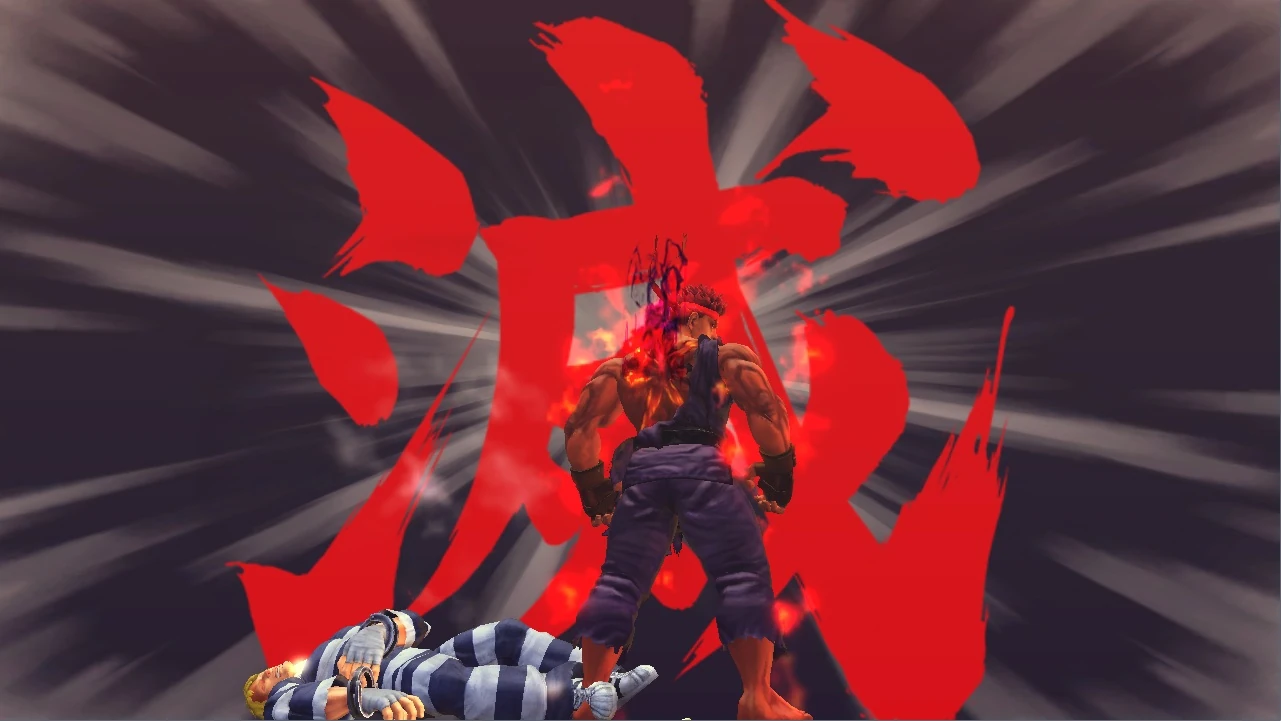
When I made the switch to PlayStation 4, I wanted to use it as an opportunity to try something new with Ultra Street Fighter IV. Rose continues to be my main, but I’ve spent a lot of time experimenting with others. This time, I decided to embrace the Satsui No Hado with Evil Ryu.
With Fan Expo now over, I take a few minutes to reflect on the event that was. In the midst of show-and-tell, I accidentally rip some of the art I bought and had to censor some unintended partial nudity.
Buy Marvel Dice Masters: Avengers VS X-Men Now From Amazon.com

Many moons ago, I wrote a post about how to read frame data. While this post is great on its own (and is one of the most popular on my site) I never got around to providing any practical applications of frame data. In this edition of the Universal Fighting Game Guide, I’ll provide an explanation for frame advantage and a practical use for it, which is crucial to grasp if you’re looking to elevate your game.
Before you read through this, I strongly recommend going back and reading my guide that explains how to read frame data. This particular edition of the guide won’t do you much good if you don’t understand the basics of frame data, so please check that out first. If you’ve already done that or already know the basics, then let’s move on with the show.

EVO 2013 definitely brought the goods this year. If you missed out on the action, definitely hit YouTube and catch the replays. But first, check out my wrap-up on Splitkick!
Check Out the EVO 2013 Wrap-Up On Splitkick.com
 (one of many hate messages I received from a salty Deathstroke player in Injustice: Gods Among Us)
I hate the word ‘cheap’. In the world of fighting games, ‘cheap’ is most overused and misused word in the vernacular. It is a word that does more damage to the fighting game community than most people think. When someone takes a loss, many are quick to dismiss their own mistakes and learning opportunities by using the word as a flimsy crutch. With that mentality, most players will never get anywhere in a fighting game.
Losing to something ‘cheap’ isn’t the problem. Odds are, what you lost to wasn’t cheap at all. Heck, if you were willing to put in the time and effort to actually improve your abilities, you probably could have a viable counter ready for any tactic that is perceived as cheap. In this edition of the Universal Fighting Game Guide, we’ll talk about the word cheap, what it means and why you should stop using it immediately for the sake of your growth as a fighting game player.

Gimmicky fighting game techniques are about as old as fighting games themselves. When I first stepped up to a Street Fighter II machine back in 1991, the first character I ever chose was Blanka, as I thought I could cheat the system by simply mashing the punch buttons to trigger Blanka’s electricity move. At the time, I thought it was a fool-proof tactic…for about 5 seconds. Instead, the computer systematically picked me apart as I wailed on those punch buttons, thinking the electricity move was bound to save me eventually.
While gimmicks may have their place in extremely specific situations, they’re not a substitute for solid and intelligent play. In this month’s Universal Fighting Game Guide post, we’ll talk about the difference between gimmicky and intelligent tactics.

I have a hard time abstaining from purchasing items with the Street Fighter name on them. I’ve bought figurines, t-shirts, posters, fightsticks, and over 20 Street Fighter games – including Street Fighter 2010: The Final Fight. I’ve always joked with my girlfriend that if Capcom released Street Fighter branded rocks, I’d probably buy those too. As a life-long fanboy of the franchise, the purchase of Street Fighter merchandise rarely gives me pause.
But then I saw the gargantuan Street Fighter 25th Anniversary set.

Back in the old days of fighting games, you only had to worry about one meter: the life meter. As long as that meter didn’t run out, you were golden. However, as the genre progressed, so to did the number of meters you were required to manage. Today, almost every fighting game has some sort of super/EX/resource meter that grants you additional moves at the cost of the resources in your meter. In this edition of the Universal Fighting Game Guide, we’re going to cover resource meters and how to leverage them to your advantage.


 In Third Person